SNL and Comedy's Collateral Damage

“... and of Comedy, we will speak hereafter. Let us now discuss Tragedy…”
It wasn’t until sometime in the 1100s that the first book on literary theory was rediscovered - Aristotle’s Poetics. “Written” around 335 BCE, this was a lecture by Aristotle talking about the qualities, rules, definitions, structure and value of dramatic works, i.e. Tragedy and Comedy.
If you read it today, you’ll get a wonderful (if obviously dated) analysis of what makes Tragedy work. And in the middle of his explanation, he says the above quote. Basically, “I’ll talk about Comedy in the next part, but now let’s talk Tragedy.” Only the next part never comes. Somewhere in those fourteen hundred years, the scroll containing the Comedy lecture was lost, and only Tragedy survived.
If that wasn’t foreshadowing for the world, I don’t know what is.
Even if we were never handed the rulebook, that didn’t stop us from plowing forward and making comedy anyway. We learned the power of laughter by trial and error, and appreciated the potent uses of this tool. Any comedian worth their salt who’s begged for recognition has parroted some version of these words from Mel Brooks:
“Comedy is a very powerful component of life. It has the most to say about the human condition because if you laugh you can get by. You can struggle when things are bad if you have a sense of humor. Laughter is a protest scream against death, against the long goodbye. It’s a defense against unhappiness and depression.”
For something so funny, the joke is on anybody who doesn’t take comedy seriously.
For a certain type of comedian, though, “not taking comedy seriously” isn’t an offense, but is often more a shield. From work lunchrooms to clubs to award shows to Netflix specials, if any of their material gets winces instead of laughs, the tired phrase “it’s just a joke” is quick to arrive.
This Seth Meyers interview with Jerry Seinfeld has been rattling around my brain for ten years. Seinfeld starts complaining about how audiences don’t like his (honestly hacky if nothing else) joke about a “gay French king”. Here, at the height of a “coddling of the American mind” world, he admits, “there’s a creepy PC thing out there that really bothers me”.
We all know the war in comedy that’s happened in the intervening years. “Audiences are too sensitive and I should be able to say anything I want” vs. “we need to take responsibility over what we joke about”. Even if I’m sad to admit that the Confederates have won the “war on PC comedy” (I mean, what are we as a society doing bringing back the r-slur?), at least one “rule” has been established, and we didn’t even have Aristotle to give it to us.
Don’t punch down.
We all instinctively know this. Use humor and laughter to poke at those who have power, not those who lack it. If jokes are a weapon, and they are, they’re to be used on the strong, not the weak. “It’s just a joke” is so hard to swallow when we take seriously the instructive power of comedy - ever since the playground, we’ve always known that the instinctive use of laughter is to say “there is a way that the world should be, and if we see something that is the way the world shouldn’t be, we should cut it down via ridicule.” Laughter is a social tool to collectively decide “this is what life should be” and “this is too silly to be condoned”, or "this is how you should act" and "this isn't."
If our one rule in comedy is “laughter should come at the expense of the powerful and not the vulnerable”, then something is still rubbing me the wrong way about this sketch.
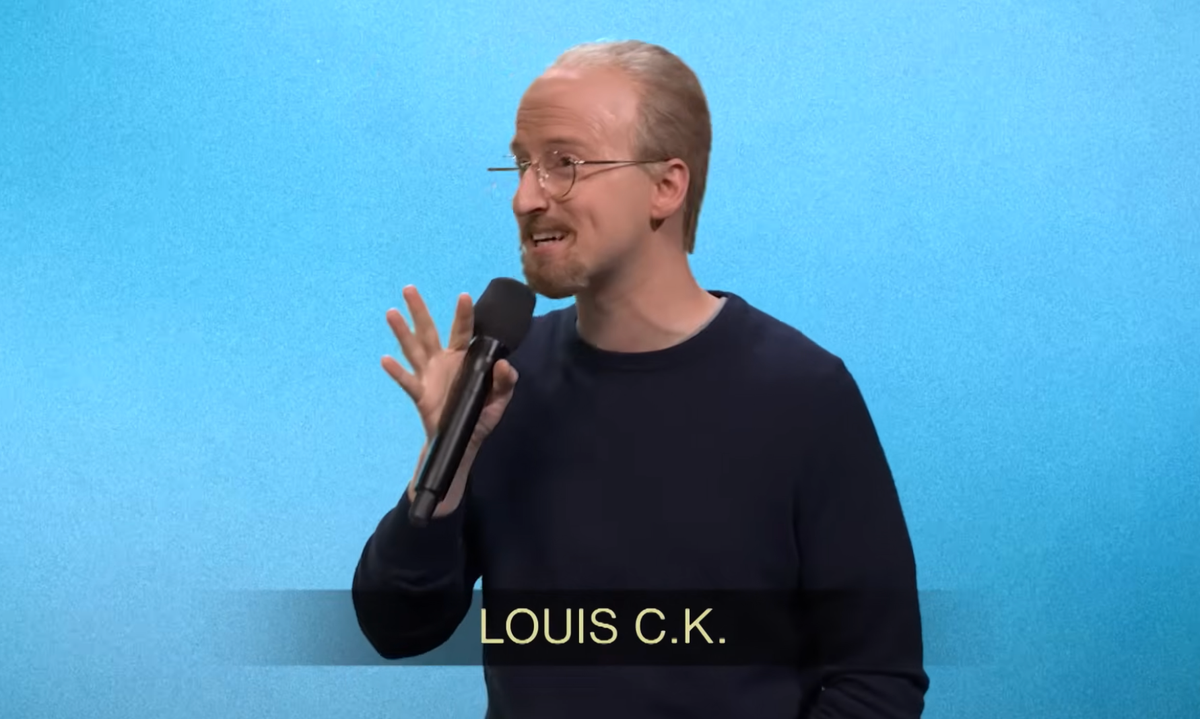
Connor Storrie was on SNL this weekend (a very game and capable host, begging for better material, but a pretty solid outing overall). The above sketch wasn’t part of his episode - it was cut for time after dress rehearsal - but it was posted on the show’s YouTube channel on Sunday morning. In it, celebrities in various stages of cancellation use Tourrettes syndrome as an excuse for all of their past horrible behavior. And if we get out our punching down rubric, I guess it kinda passes. Ostensibly, we are laughing at these powerful people using a shallow, convenient hall pass to erase consequences for their terrible deeds.
And, of course, the week they choose to poke fun at the fake instances of people using Tourrettes as an excuse for bad behavior is the week a real person with Tourrettes is mortifyingly getting accused of the same thing. To be absolutely clear, Coprolalia is not a way for bad people to get away with their bigotry, despite SNL's jokes.
The sketch has been widely criticized, but not by everyone. Depending on what corner of the internet you’ve landed in, we get a new variation of “it’s just a joke”, and they’re playing by the rules now. Anecdotally, I’ve seen defenses of this sketch boil down to “real people with Tourrettes are not the butt of the joke in this sketch - opportunistic celebrities are.”
For the first time in a long time, I find myself coming to the “it’s just a joke” brigade, thinking they’re actually acting in good faith. Even if they’re wrong, I don’t think they’re necessarily incorrect or just trying to get away with mocking the meek. We’re just coming to the limits of what “don’t punch down” can cover by itself.
This wasn’t even the first time this season I’ve had this wrong-target stone in my shoe about an SNL sketch. From Nikki Glaser’s episode in the fall, it’s a sketch about a man who dresses up as a woman to invade a sorority. Again, the target of this sketch is supposed to be skeevy men who want to see women in bikinis. But, I dunno, doesn’t this OBVIOUSLY remind you of any recent conservative talking points and strawman arguments designed to oppress a certain class of people?
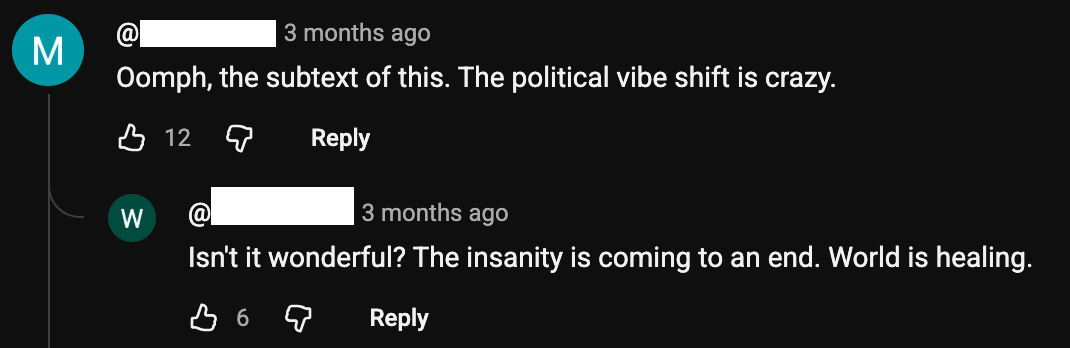
YouTube certainly thinks so.
Dave Chappelle is someone who, in recent years, has been one of the most prominent users of the “it’s just a joke” defense. And for the millions of reasons why that’s sad and frustrating, one of the biggest is that he used to get it. In an interview with Oprah Winfrey in 2006, shortly after leaving his Comedy Central show, he recalled a sketch of himself in blackface - an inciting incident in his decision to leave:
“So then when I'm on the set, and we're finally taping the sketch, somebody on the set [who] was white laughed in such a way—I know the difference of people laughing with me and people laughing at me—and it was the first time I had ever gotten a laugh that I was uncomfortable with. Not just uncomfortable, but like, should I fire this person? … That concerned me. I don't want black people to be disappointed in me for putting that [message] out there. ... It's a complete moral dilemma.”
If we’re going to have a serious discussion about funny things, the conversation can’t stop at the targets of our humor. Comedy has collateral damage. We need to be careful not just at who we’re aiming at, but how we’re aiming. Sometimes we can try to hurt someone powerful, but we can so easily use the pain of people who are suffering to take those shots.
No, we aren’t evil if someone twists the intent of our joke into something more evil. But we do have a responsibility to tell the right jokes, in the right way, at the right time. If not, they are easily being used as more kindling for the fire of whatever cultural boogeyman is haunting us this week. And that isn't funny; it's just tragic.