I never give you my number...

“Now if man had been born with six fingers on each hand
He'd also have twelve toes or so the theory goes
Well, with twelve digits, I mean fingers
He probably would've invented two more digits
When he invented his number system
Then, if he saved the zero for the end
He could count and multiply by twelve just as easily as you and I do by tens”
That Schoolhouse Rock song was not my introduction to duodecimal numeric systems, but it makes a pretty good primer. Instead, I was mindlessly scrolling reddit and saw a strange meme, captioned “clocks if we had six fingers on our hands.”
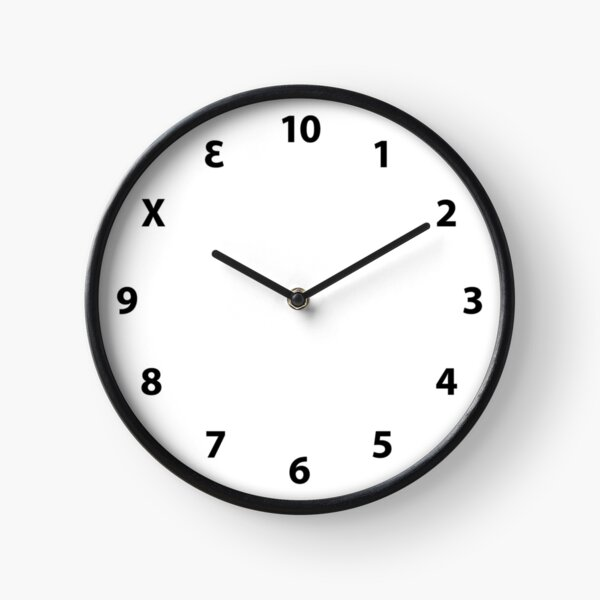
I saw that image, wondered what it meant, figured out what it meant, and suddenly my brain broke. Why had I never wondered why we only have ten digits, 0-9, that reused themselves every time we hit an arbitrary counting milestone? Why was it so ingrained that one more than nine was nice and “round”, but not one after eight, or one after eleven? Why couldn’t god have blessed us with two extra fingers, making feet and eggs and months and clocks so much easier to understand? I took base-ten as granted all my life, and like a dummy, never considered that there could have been a more convenient way.
Now I grumble quietly to myself every time I buy half-a-dozen eggs for a seven-day week, or divide a project into twelve months of effort, or encounter other mathematical champagne problems. I also look at other objects differently, wondering if there are similar hidden system anomalies. And I start staring at my piano.
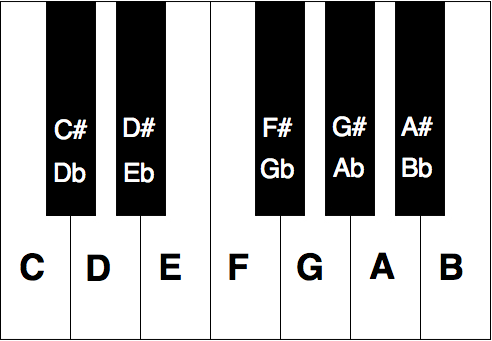
Anyone who’s ever spent even the smallest amount of time learning how to play the piano knows middle C. It is the first note taught to anyone sitting down at the bench, because the key of C is the easiest key to play on that instrument. If you start on middle C and go up or down, only hitting the white notes, you are playing a major scale. All the notes from C to C, using the white keys, play the scale we know in solfége - Do, Re, Mi, Fa, and So on. And if you want to play a lot of popular music, you can hop around from chord to chord in the key of C without touching any tricky black key. That’s why every time I try to play a new song or write on the piano, I find my notes in the key of C and only transpose to different keys as needed.
If this note is so important, if it’s so foundational and easy to play, why isn’t it A? Why is it C instead? Why didn’t we start our musical notation system two tones lower? Why don’t we take this arbitrary pitch at 256 Hz and label it the start of our musical alphabet, instead of the third step?
Well, Olivia, it’s because not everything revolves around you and your western scales and instruments.
There are plenty of people smarter than me with actual backgrounds in music theory who have explained this in much more depth, but the short answer is that we determined that A is about 440 Hz long before the major scale asserted its dominance in western popular music. If the melodies of gregorian chants used the same scale as, say, “Happy Birthday”, there’s a chance that the major key of A would be the one that used all white notes. But as it stands, we live in a world with imperfect objects, playing the key of C with only five damn fingers on each hand.
What does it sound like if you play the white notes, starting with A? We’re no longer playing the happy, upbeat major scale, but the sadder minor scale. It’s the sound used in funeral dirges, in forlorn ballads, in despairing laments. It’s “she loves me not” to major’s “she loves me.”
But it’s still an incredibly popular scale - probably only second in popularity to major in all of the diatonic scales. It uses all of the same notes as C Major - no sharps or flats - but they’re played in a different context, giving them a different, more dour tone. And that connection between A and C might be the secret ingredient in my favorite ever piece of music.
I know it isn’t cool to love the Beatles. “Oh, your favorite music is by the most popular act in the past century, pride of the boomers? I bet you’d love pizza and not being stung by wasps too.” But I can’t help it. Even though these songs are owned by everyone, every time I hear a Paul McCartney melody, it sounds like it was written just for me. And like a good dork, I love everything they made.
Abbey Road wasn’t the last album the band released - that honor went to Let It Be. But they were unsatisfied with what came out of those sessions, so they came back to their home studio and recorded Abbey Road, all knowing it would likely be the last time they worked as a unit. They ended up recording some of their longest-lasting material - songs like “Come Together”, “Something”, and “Here Comes the Sun” are all from this album. They also recorded “Maxwell’s Silver Hammer”, so, you know, they can’t all be winners.
But on the second side of the LP they performed an experiment. In their nine years of working together, they amassed a huge backlog of unused material - bits of melody or snippets of song ideas that they never finished crafting into a full song. So, John and Paul took a ton of these unused scraps and stitched them together in a 16 minute medley at the end of the album. Even though the medley is labeled as 8 (and a half) individual songs on the record, almost every track leads directly into the next, and the boys referred to it in the studio as “The Long One.”
If any piece of music by the most popular band in the world can be called a “fan favorite”, it’s this. It’s a true “real ones know” shibboleth, separating actual Beatlemaniacs from those who kinda remember “Yellow Submarine.” It’s my favorite piece of music, full stop. If I had to limit myself to listen to one thing for the rest of my life, it’s this. I used to listen to it in full, back when I did theatre, at least once before every single performance. It is simply creativity incarnate, and I never get tired of it. You can even listen to it, ignoring everything but the bass, and you’ll still be entranced by the beautiful, inventive arrangements.
You’ll usually hear the medley talked about in these terms, “The Beatles took all their garbage out of the pile and still made incredible music out of it!” I won’t pretend there’s no truth to that sentiment - this really was a way to burn some songs that couldn’t stand on their own. But to paint this music as just a grab-bag of debris from world-class pop songwriters is to do a disservice to what I think is a very meaningful, cohesive piece of art.
As much as people blame the breakup of The Beatles on egos butting heads, or people outgrowing each other, or misogynist and racist notions of certain girlfriends, the band probably could have stayed together a lot longer if Brian Epstein hadn’t died. Brian was their trusted manager, a true partner to them and a fifth Beatle if there ever was one, shepherding the boys to unfathomable success and keeping them grounded. And when he passed in late 1967, the band was inevitably not long for this world. Brian's superpower was keeping them together as a unit, taming those huge personalities and putting egos in check, pointing their energy and talent in the right, unified direction.
In Brian’s sudden vacuum, the boys found themselves having to worry about a lot of things that Brian used to take care of. They set up their own company, and found themselves surrounded by much more unscrupulous men than Brian. The breakup was sure to come under such pressure. The four men would always love each other, but the stress of managing their money was too large a toll and too big a distraction from their creative endeavors. And so, the Beatles ended, not with a bang, but with multiple simultaneous lawsuits.
That’s what “The Long One” is about. Love, and the greed, selfishness, and money that all get in the way.
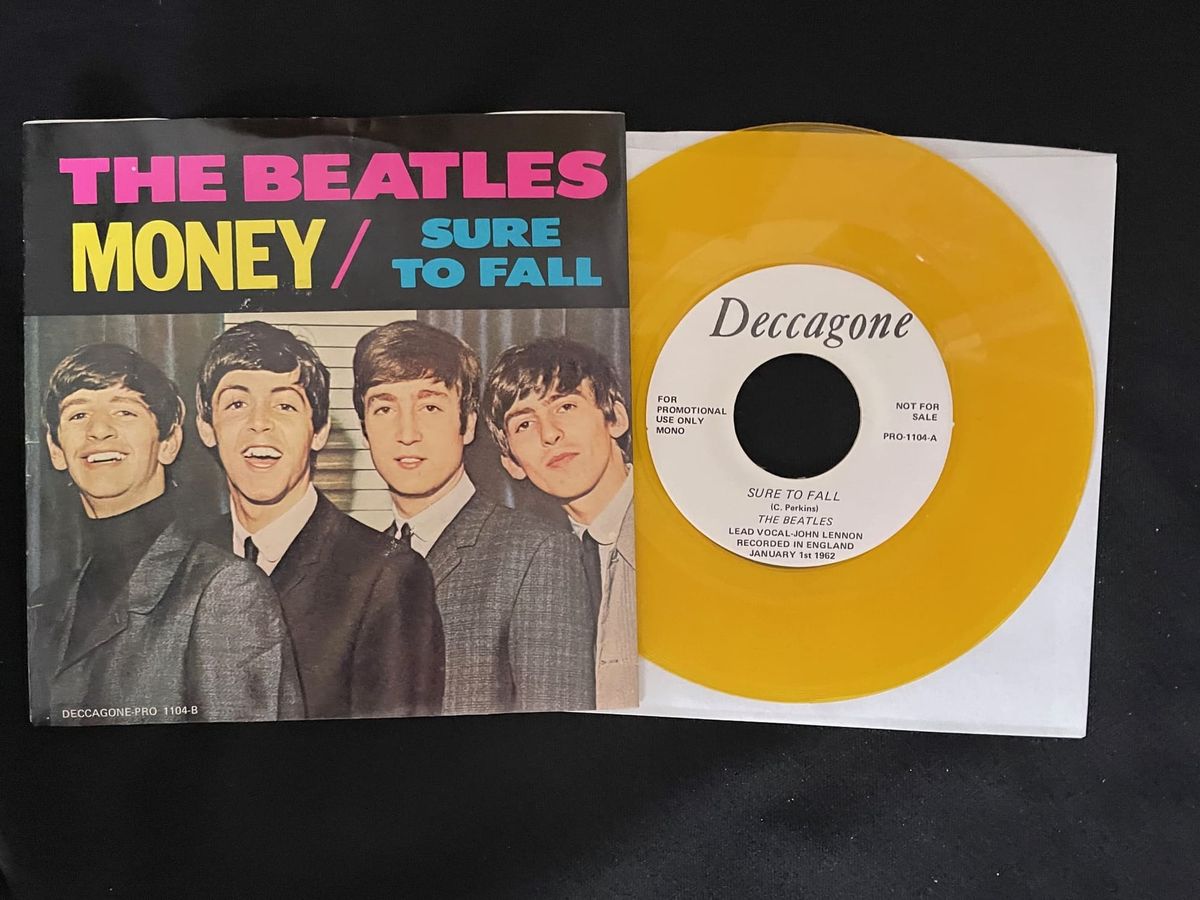
The title of the opening track of the medley lays out the tension clearly: “You Never Give Me Your Money” was at least partially written by Paul in response to some of the shady dealings of the band’s recent business partners. Over a sad mid-tempo piano melody, it immediately articulates problems of owing people, giving to each other, and money. If we don’t receive what we are owed by others, we “break down.” And the rest of this track tells tales of breaking away, leaning on yourself and your own hard work to reach “one sweet dream.”
These themes continue throughout the medley, constantly contrasting greed and love. We meet characters like Mean Mr. Mustard, a greedy, “dirty old man” who “keeps a ten-bob note up his nose”, or his sister Pam, a much sweeter, hard-working woman. In “She Came In Through The Bathroom Window”, we learn of a trust-fund baby who breaks into strangers’ apartments, and the cop who quits his job, inspired by her story. Later in the medley, after a brief reprise of the first track, we hear a singalong anthem about “Carry[ing] That Weight” and toiling in labor “a long time.”
Musically, it holds together sublimely, and that cohesion is helped by a very subtle but effective piece of modulation, or changing of keys. For almost the entire medley, we are either in the key of A or C - those closely related but different feeling keys mentioned above. And the boys (probably not consciously) deploy these keys very strategically: greed is usually in the key of A, and love is usually in the key of C. “You Never Give Me Your Money” begins with a plaintive A-minor chord, the sweet lullaby “Golden Slumbers” is firmly in C. The cunning “She Came In Through The Bathroom Window” is mostly in A, the relaxed “Sun King” in C. And in the grand finale, at the end of “The End”, we hear the ultimate statement of both the themes and the music.
“And in the end, the love you take…”
This first part of the final line, the last thing the Beatles will ever say to us, is concerned about love as a transaction. What am I going to get? What value can I extract from love? What can I take? And we hear this firmly planted in a chugging key of A.
“... is equal to…”
These three words take us directly from A to our new key, using the F chord as a beautiful pivot point. So elegant in its simplicity and utility.
“... the love you make.”
Here we find our answer. Love can be a stressful thorn, full of heartache and hurt from those you want to be close to. And, at its worst, it can be minimized to a simple calculation of “what do I get out of it.” But here, landing in our safe, lovely key of C, we’re left with a sentiment that seems trite out of context. “You get what you give” can sound like zodiac, fortune teller Oprah nonsense. But if you’ve ever had to work hard for your love, fight through all the greed and self interest that many people don’t survive, maintain your friendships through bitter lawsuits over the monetary value of your catalog, you know that the key to love is forgiving wrongs and embracing selflessness, giving the love you want to get.
And it’s all underpinned by those sister keys, A and C. The same notes, A through G, played in different contexts, feeling subtly poles apart. I’m sure for many years the boys looked back at their time together, hearing those years in A minor. But that’s not the only key you can hear those seven notes. They so easily modulate to C major. Love is all you need to take a sad song and make it better.